

close
Choose Your Site
Global
Social Media
Views: 0 Author: Site Editor Publish Time: 2026-10-27 Origin: Site


Imagine walking into a mechanical room on a freezing January morning. The boiler is firing at full capacity. Yet, the radiators in the furthest offices remain stubbornly cold. Are your monthly heating bills slowly rising while comfort levels drop? These cold rooms often point to hidden piping issues rather than a failing heat source.
Internal debris blocks water flow silently over time. Because hydronic systems are closed and pressurized, they hide this gradual pressure drop incredibly well. Here is the harsh reality from the field. By the time a facility manager notices a problem, a circulator pump may have already burned out from overexertion.
Recent industry data reveals a critical shift in commercial HVAC management. As energy efficiency mandates push facilities toward variable-speed pumping technology, a dangerous blind spot has emerged. Smart pumps automatically compensate for flow restrictions, masking the early warning signs of clogged filtration components. This trend is actively pushing the industry toward predictive maintenance models rather than reactive, costly emergency repairs.
Below, we uncover exactly why these blockages happen out of sight. More importantly, we will look at how upgrading to a premium filtration component acts as an inexpensive insurance policy. It prevents catastrophic equipment damage and keeps your heating loop running at peak efficiency.
Silent Efficiency Killers: Flow loss in heating loops occurs gradually. Magnetite, limescale, and residual installation debris accumulate inside the internal mesh screen over months of operation.
System Protection: Installing a durable filtration valve serves as a low-cost, high-return component. It shields expensive boilers and circulator pumps from irreversible mechanical wear.
Common Failures: Incorrect mesh sizing, improper installation orientation, and neglected routine maintenance are the primary reasons these components fail in the field.
The Brass Advantage: Upgrading to forged brass provides superior resistance to high thermal loads, pressure fluctuations, and corrosion in demanding HVAC applications.
Understanding the mechanics of a heating loop strainer is essential for maintaining optimal fluid dynamics. These humble components operate as the primary defense mechanism against solid contaminants drifting through your pipes.
Think of this valve as the filtration kidney of a mechanical piping network. It mechanically separates and removes suspended solids from flowing liquids by utilizing a precisely perforated wire mesh straining element. Clean water passes through the mesh relatively unimpeded. Meanwhile, larger particulates are trapped safely within the screen chamber.
From an engineering and economic perspective, the return on investment is staggering. A standard filtration valve typically costs just a fraction of the equipment it protects. By capturing stray particulates, this inexpensive barrier prevents debris from entering a high-cost boiler heat exchanger. I have seen countless pump impellers scored by a single rogue metal shaving. Without this physical barrier, you are risking emergency repairs that cost thousands of dollars.
The specific Y-shape of this valve is no accident. It is a deliberate engineering choice driven by fluid dynamics. The internal design directs the incoming fluid downward at a slight angle into the mesh screen. Clean water easily navigates the perforations and continues down the pipeline.
Simultaneously, heavier debris is guided by gravity and fluid momentum directly into the blow-off pocket at the bottom of the branch. This clever design ensures that trapped debris settles away from the primary flow path. Consequently, the valve minimizes internal pressure drops when the screen is relatively clean. This allows the hydronic system to maintain its designed flow rate without overworking the pump.
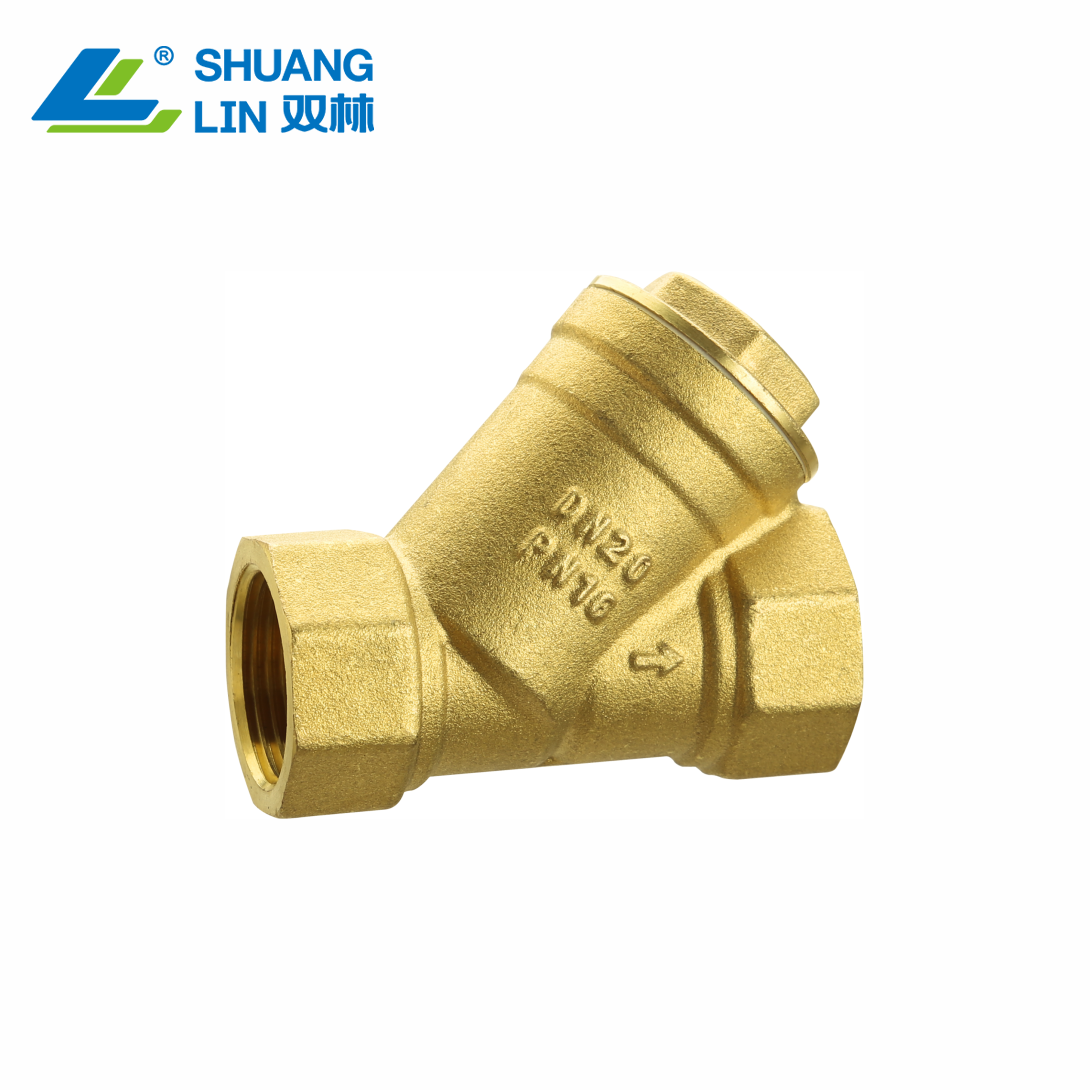
One of the most dangerous aspects of a clogged filtration component is that the symptoms rarely present themselves immediately. Degradation occurs entirely out of sight inside the dark, pressurized environment of the pipe.
Modern HVAC systems frequently utilize variable-speed, electronically commutated motor pumps. These intelligent pumps are designed to maintain a specific flow rate by automatically adjusting their speed based on system pressure. While highly efficient, this technology creates an unintended blind spot.
When a strainer begins to choke, the smart pump detects the downstream resistance and automatically ramps up its speed to compensate. The building remains warm, so nobody notices the fault. However, the pump is working significantly harder. It consumes excess electrical energy and generates dangerous internal heat. This silent escalation continues until the pump either reaches its absolute maximum capacity or burns out entirely due to sustained thermal overload.
Debris in a closed-loop system rarely comes from the outside. Instead, it is generated internally over years of operation. Understanding what actually clogs your system helps in planning accurate maintenance schedules.
Magnetite: Commonly known as black sludge, this dark, abrasive iron oxide forms when dissolved oxygen interacts with steel or cast-iron components inside the piping. It is highly magnetic and particularly damaging to modern pump motors.
Limescale: Whenever fresh makeup water is introduced to maintain system pressure, it brings dissolved minerals along with it. Under high boiler temperatures, these minerals precipitate out. They form hard scale flakes that easily blind fine mesh screens.
Installation Debris: Newly installed or recently repaired systems often hide residual construction materials. Leftover solder beads, excess pipe dope, copper shavings, and shredded Teflon tape frequently wash into the mesh during the initial system startup.
Even a premium component will fail if it is not selected, installed, or maintained according to strict engineering standards. Human error during installation accounts for a massive percentage of early failures in the field.
Selecting the correct mesh size is a delicate balancing act. The screen must be fine enough to catch damaging particles but coarse enough to allow sufficient water flow.
If the mesh is too fine, like an 80-mesh screen, it will blind almost immediately with microscopic magnetite. This requires constant cleaning and causes severe pressure drops. Conversely, if the mesh is too coarse, it allows dangerous debris like welding slag to pass right through to the pump. For standard closed-loop hydronic heating systems, a 20-mesh to 40-mesh stainless steel 304 screen is generally considered the sweet spot for reliable performance.
Orientation errors are a leading cause of malfunction. When placed in horizontal piping runs, a brass Y strainer must be installed with the branch pointing horizontally or downward.
If an installer mistakenly points the branch upward, the debris cannot settle into the collection pocket. Instead, when the circulator pump turns off and the flow stops, gravity pulls the trapped debris backward out of the screen and into the main pipe. When the system restarts, this heavy debris is forcefully slammed back into the mesh. This repeated impact eventually tears the delicate wire. The industry rule of thumb is simple. The branch must always point down.
A standard unit usually arrives from the factory with a solid brass plug on the debris pocket. For maintenance, a technician must shut down the entire system, isolate the valve, and unscrew the cap to remove the mesh.
Failing to replace this standard plug with a dedicated blow-down ball valve turns routine maintenance into a labor-intensive chore. Without a blow-off valve, technicians must drain a portion of the system. This introduces fresh, oxygenated water later, which only promotes further corrosion. Installing a simple drain valve on the blow-off port allows for a quick flush of the debris pocket while the system remains fully pressurized.
Identifying a blockage early can prevent catastrophic equipment failure. Facility managers and homeowners alike should monitor for specific mechanical and thermal indicators.
The most noticeable symptom for building occupants is uneven heating. When a mesh screen is severely restricted, the overall gallons per minute of the system drops drastically.
Hot water loses its thermal energy rapidly as it travels through the piping network. If the water moves too slowly because of a blockage, it releases all its heat in the first few rooms. By the time the fluid reaches the radiators or baseboards at the furthest points of the loop, it is already cold. This results in distinct, isolated cold spots throughout the building.
A choked flow path can severely damage your primary heat source. Boilers require a specific, constant minimum flow rate to transfer heat away from the burner effectively.
If the flow is restricted by debris, the water remains trapped inside the boiler heat exchanger for too long. This causes localized boiling, producing a loud banging or rumbling noise that sounds like rocks tumbling in a dryer. This kettling effect induces severe thermal shock. It can crack cast-iron heat exchangers or warp stainless steel components, leading to an early grave for the boiler.
Pumps are engineered to push water, not pull it against a vacuum. If a clogged filter is located on the suction side of the pump, the motor must work incredibly hard to draw water through the blocked mesh.
This extreme negative pressure causes the water to vaporize instantly, creating microscopic bubbles. When these bubbles pass into the higher-pressure zone of the pump impeller, they collapse with violent, explosive force. This phenomenon is known as cavitation. It sounds exactly like marbles rattling inside the pipe and will rapidly pit and destroy the internal metal components of the pump.
When evaluating the components of a hydronic system, material selection dictates the longevity of the entire loop. While it might be tempting to utilize lower-cost materials, empirical data from HVAC maintenance records consistently demonstrates that upgrading yields a significantly higher return on investment.
Heating loops operate under highly demanding conditions. Closed-loop systems frequently experience temperature fluctuations ranging from ambient room temperature up to 90 degrees Celsius or higher, alongside sustained static and dynamic pressures.
In these harsh environments, material integrity is paramount. Forged brass, specifically high-grade CW617N brass, has become the undisputed industry standard for commercial and residential heating loops due to its exceptional thermal tolerance and mechanical strength. Unlike plastics like CPVC, which can warp or become brittle under prolonged exposure to high-temperature water, brass maintains its structural density. Furthermore, compared to cheap cast iron, premium brass offers superior corrosion resistance. High-quality variants are specifically engineered to resist dezincification, ensuring the valve body will not weep, crack, or become porous over decades of continuous use.
Space constraints in modern mechanical rooms often force installers to compromise on optimal piping layouts. Traditionally, a standard installation requires three separate components. You need the strainer itself, an upstream isolation valve, and a downstream isolation valve. This setup requires multiple threaded or soldered joints, increasing the potential for leak paths and consuming valuable linear pipe space.
To address this engineering challenge, manufacturers have developed highly integrated solutions. By utilizing a filter brass ball valve, facility managers can streamline their piping systems. This device combines the mechanical filtration capabilities of a Y-strainer with the reliable shut-off mechanism of a quarter-turn ball valve into a single, compact housing. This integration reduces installation time, minimizes potential failure points, and allows maintenance personnel to isolate the flow and clean the internal mesh screen in mere seconds.
Feature Comparison | Standard Y-Strainer Setup | Integrated Filter Brass Ball Valve |
|---|---|---|
Installation Space | Requires 3 separate piping components | Compact, single-body design |
Maintenance Speed | System drain often required | Quarter-turn isolation for instant access |
Leak Potential | High risk due to multiple threaded joints | Low risk due to integrated housing |
Pressure Rating | Typically PN16 | Up to PN25 using high-performance CW617N brass |
A filtration component does not operate in isolation. It is just one part of a broader fluid control strategy. While it is responsible for removing particulate matter, other components are required to maintain directional fluid dynamics.
In complex, multi-zone heating systems utilizing multiple circulator pumps, preventing reverse flow is critical. If a pump cycles off, the pressure differential can cause hot water to flow backward through the loop, leading to thermal siphoning and inaccurate temperature control. To prevent this, engineers pair their filtration units with a reliable check valve. The standard configuration involves placing the strainer upstream to capture magnetite and scale. This ensures that only clean water passes through, which critically protects the internal seating surfaces of the downstream directional valves. If debris were allowed to bypass, it could easily lodge in the hinge of the directional valve, preventing it from closing fully and causing cross-contamination.
Even the most expensive filtration component will fail to protect your system if it is installed incorrectly. Proper physical placement and environmental considerations are required to maximize the efficacy of the component over its lifespan.
The golden rule of hydronic filtration is simple. Guard the most expensive moving parts. Therefore, the unit must be strategically positioned upstream on the suction side of the circulator pump and immediately before the boiler heat exchanger inlet.
By placing it here, it catches returning debris from the building radiators before it can enter the mechanical core. Ensure there is adequate physical clearance below the branch. A technician must be able to easily remove the screen or attach a hose to the blow-off valve without hitting the floor or adjacent pipes.
Energy codes strictly require hot water pipes to be heavily insulated to prevent ambient heat loss. However, insulation contractors often wrap permanent fiberglass or elastomeric foam directly over the valve bodies, completely hiding them from view.
Out of sight usually means out of mind for maintenance crews. When components are buried under permanent insulation, they are almost always skipped during annual servicing. Over years of operation, they silently accumulate debris until flow is entirely restricted. The objective best practice is to utilize removable, velcro-fastened insulation jackets specifically tailored for valves. This retains the thermal efficiency of the heating loop while allowing technicians instant access to the cap during maintenance routes.
Routine maintenance is the only proven method to ensure a heating loop operates at its designed flow rate. Establishing a standardized cleaning protocol prevents the silent accumulation of sludge and scale.
When a pressure drop is detected, or as part of an annual preventive maintenance program, follow this systematic approach to service the brass strainer valve safely.
First, isolate the component. Shut off the circulator pump to halt fluid momentum, then close the upstream and downstream isolation valves to prevent draining the entire building. Next, carefully open the blow-off valve on the cap to vent any trapped static pressure into a bucket. This also purges loose sludge that has settled in the pocket.
Once depressurized, use the appropriate wrench to remove the brass cap and carefully extract the cylindrical stainless steel mesh screen. Do not strike the delicate screen against hard surfaces. Instead, use a stiff nylon brush and a mild descaling solution like white vinegar to dissolve hard water scale and scrub away magnetite sludge. Finally, inspect the O-ring or PTFE gasket on the cap. If it is flattened, brittle, or cracked, replace it immediately to prevent weeping. Reinsert the screen, tighten the cap, and slowly open the isolation valves to check for leaks.
While forged brass bodies can easily last for decades, the internal mesh and seals are consumable wear parts. Knowing when to replace rather than clean saves time and prevents unexpected nighttime failures.
You should clean the unit if the mesh is simply coated in soft sludge or light, removable scale. However, replacement of the screen or the entire valve is required if you observe any physical damage. If the stainless steel wire is frayed, crushed, or permanently deformed, it will allow debris to bypass directly into the pump. Furthermore, if the threads on the brass body have become cross-threaded, or if the valve body shows signs of external green oxidation combined with active weeping, the structural seal is compromised. At this point, the entire unit must be replaced.
A clogged filtration screen is the silent killer of heating system efficiency. Because the degradation happens slowly inside closed pipes, it often goes entirely unnoticed until a major component fails.
Ignoring this small, inexpensive part ruins high-cost boilers, destroys circulator pumps, and directly causes skyrocketing winter energy bills. The solution is straightforward. Prioritize proper filtration. Upgrading to a premium forged brass Y-strainer or an integrated filter ball valve ensures reliable, long-term system protection against magnetite, scale, and debris.
Before the deep winter freeze sets in, take the time to inspect your mechanical room. Check your flow rates, listen for pump cavitation, and do not hesitate to upgrade your filtration components. For high-performance, precision-engineered solutions tailored for demanding HVAC applications, explore the robust product lineup at Shuanglin Valves to find the exact specifications your system requires.
For new installations, you should check the component after the first 30 days of operation to capture any residual installation debris, such as solder beads or pipe tape. Afterward, implementing a cleaning schedule once a year—ideally right before the winter heating season commences—is typically sufficient for maintaining optimal flow in both residential and commercial closed-loop systems.
Absolutely. A severely restricted mesh drastically reduces the volume and velocity of water flowing through the system. This flow reduction can cause the water inside the boiler heat exchanger to boil, a destructive phenomenon known as kettling. Over time, kettling leads to severe thermal shock, potential cracking of the heat exchanger, and premature system failure.
A standard Y-strainer is solely designed to filter debris. It requires separate isolation valves installed on the adjacent piping to allow for safe maintenance. A filter brass ball valve integrates both a quarter-turn shut-off mechanism and a filtration screen into a single, compact unit. This integration saves installation time, reduces potential leak points, and conserves valuable linear pipe space in tight mechanical rooms.
The directional arrow cast into the exterior of the valve body must always point in the direction of the fluid flow. Furthermore, the leg which houses the mesh screen and blow-off pocket should point horizontally or downward. This orientation ensures that gravity keeps debris trapped in the collection pocket even when the fluid stops moving.
For closed-loop hydronic heating systems, a 20-mesh to 40-mesh stainless steel screen is generally considered the industry standard. This specific sizing is fine enough to capture damaging scale, rust fragments, and installation debris, yet coarse enough to prevent rapid clogging and the severe pressure drops associated with ultra-fine meshes.
Yes, all filtration devices create a slight, calculated pressure drop as fluid navigates through the mesh screen. However, a properly sized valve with a clean screen will produce a negligible drop that does not impact system performance. The pressure drop only becomes a severe mechanical issue when the mesh becomes blinded by neglected debris.
Yes, but with strict conditions. In vertical piping, the fluid must be flowing downward. This allows gravity to assist in directing the debris into the collection pocket. If installed in a vertical pipe with upward flow, the debris will fall back into the main pipeline whenever the pump shuts off, rendering the collection pocket useless and potentially damaging the mesh upon restart.


