

close
Choose Your Site
Global
Social Media
Views: 0 Author: Site Editor Publish Time: 2026-10-23 Origin: Site


Managing commercial properties means handling brutal, high-traffic plumbing demands every single day. Does a slow drip seem harmless? Think again. A single leaking commercial faucet wastes thousands of gallons annually. This hidden liability silently inflates utility bills. It invites structural water damage. It causes operational downtime. Standard residential fixtures simply cannot survive this abuse.
Picture an active industrial park. Maintenance crews rapidly swap heavy hoses. Landscapers drag equipment across concrete. Municipal water pressure spikes unpredictably. In this harsh environment, lightweight valves crack under fatigue. You need a commercial-grade, heavy-duty solution. Let us dive into the engineering behind reliable plumbing hardware. We will cover thread fits, seal wear, and winter pipe protection.
Residential and commercial plumbing are entirely different beasts. High-frequency usage demands uncompromising mechanical strength.
Exterior water access points take a beating. Janitorial staff operate them dozens of times weekly. Facilities often face severe water hammer. This phenomenon involves violent hydraulic pressure spikes caused by heavy machinery shutting down. Plastic or zinc-alloy fixtures will develop hairline fractures under this stress. Catastrophic blowouts inevitably follow.
Material composition dictates lifespan. High-purity brass remains the undisputed standard. It offers immense tensile strength, superior temperature tolerance, and exceptional rust resistance. PVC and zinc boast lower upfront costs but degrade rapidly under UV rays and weather changes. Zinc suffers from dezincification. This corrosive process leaches zinc away, leaving a brittle shell. Investing in commercial brass slashes replacement frequency and prevents emergency floods.
Material Type | Tensile Strength | Corrosion Resistance | Commercial Lifespan |
|---|---|---|---|
CW617N Brass | Excellent (Handles high psi) | High (Resists hard water scale) | 15 to 20+ Years |
Zinc-Alloy | Moderate (Prone to cracking) | Low (Vulnerable to dezincification) | 2 to 5 Years |
Plastic / PVC | Low (Fails under water hammer) | Moderate (UV light causes brittleness) | 1 to 3 Years |
Even a bulletproof metal body fails if the connection leaks. Improper thread matching causes endless headaches for maintenance teams. Procurement managers must specify exact geometries to ensure watertight seals.
Commercial systems use specific geometries. The two critical standards are National Pipe Thread and Garden Hose Thread. National Pipe Thread is tapered and used for the wall inlet. As you tighten the male valve into the female pipe, the taper wedges tightly. This creates a mechanical seal via metal-to-metal friction. Conversely, Garden Hose Thread is straight. It connects the spout to the hose. This thread does not seal on the metal itself. It relies entirely on a compressed rubber washer at the base.
Forcing a tapered fitting onto a straight connection destroys precision-machined grooves. When installing an outdoor hose tap, crews must apply high-density PTFE tape solely to the tapered wall connections. Wrap the tape three times clockwise. The tape sinks deep into the grooves. This creates a flawless fit without damaging torque.
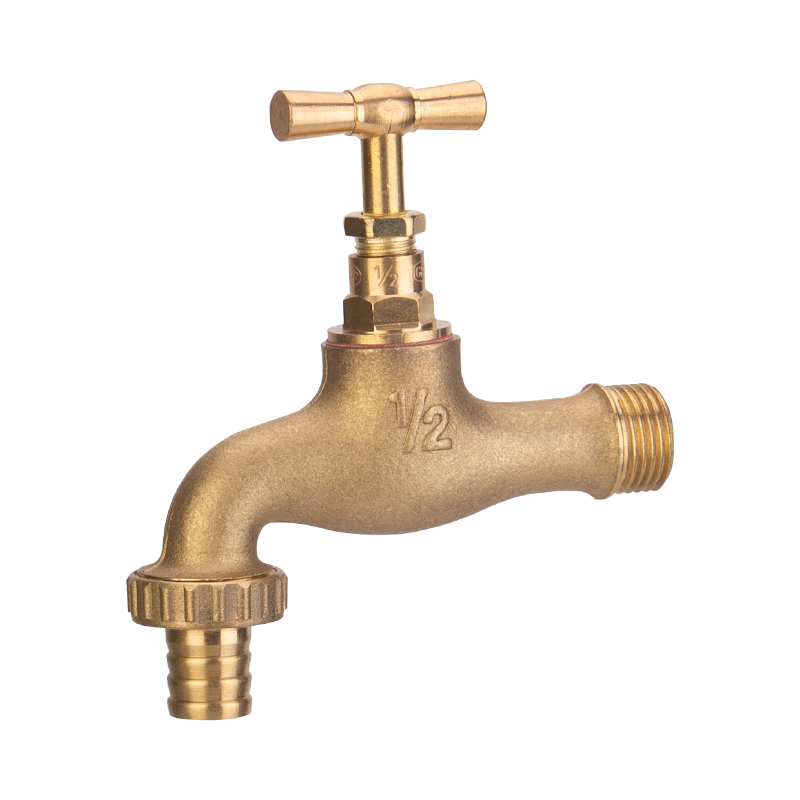
A rugged brass casing outlasts the building. However, degraded internal seals will still cause leaks. Stopping internal wear slashes maintenance overhead.
Three culprits destroy commercial seals. First, relentless mechanical friction from daily operation abrades rubber gaskets. Second, municipal water carries dissolved calcium and magnesium. These minerals calcify on valve seats. They form a jagged surface that shreds standard washers. Finally, thermal cycling strips elastomers of their elasticity. They become brittle and useless.
Old multi-turn compression valves force users to crush a washer against a metal seat. This guarantees rapid wear. Modern facilities now specify quarter-turn ball valves. These feature a polished brass ball suspended between self-lubricating PTFE seats. This frictionless design cuts right through mineral buildup. It ensures maximum longevity in hard-water districts.
Winter weather threatens plumbing infrastructure in colder climates. Failing to prepare leads to burst pipes and massive structural remediation costs.
Recent commercial plumbing trend analyses highlight a major shift in facility management. Unpredictable severe weather events now strike traditionally temperate regions. Consequently, managers are abandoning reactive repairs. The new industry standard mandates proactive frost-proof infrastructure. Properties are upgrading to elongated frost-proof sillcocks. These house the shut-off mechanism deep inside the heated building envelope. This strategic move directly mitigates skyrocketing insurance premiums tied to winter water damage.
Water expands by about nine percent when it freezes. This generates hydraulic pressure exceeding 2,000 psi. No brass casing can hold back solidifying ice. The body splits, or the cartridge ruptures. A massive flood follows the spring thaw.
Facilities using standard exterior fixtures must execute a strict protocol before the first freeze. First, disconnect all hoses and splitters. Trapped water neutralizes a valve's ability to drain. Next, close the interior isolation valve. Finally, open the outside fixture completely. Keep it open all winter to let residual water escape.
Commercial plumbing extends beyond the exterior brickwork. Matching the fixture to the exact application maximizes efficiency and security.
Exterior spaces require a balance of accessibility and security. Water theft plagues strip malls and industrial parks. Specify bibcocks with padlock-compatible handles or removable loose-key designs. Authorized groundskeepers get immediate access. The public cannot tamper with the supply.
Indoor janitorial rooms and commercial kitchens demand equal durability. Cleaning staff fill heavy mop buckets daily. They attach chemical dispensing hoses. This places immense downward stress on the sink hardware. Installing a robust utility water faucet is absolutely crucial. A wall-mounted commercial unit handles the weight of attached hoses. It endures repetitive rough motions without ripping the mounting bracket from the drywall.
Procurement managers must look past marketing fluff. Evaluate strict technical specifications to guarantee code compliance and reliability.
Prioritize these parameters when sourcing upgrades.
Material Purity: Demand fixtures forged from CW617N brass. This specific alloy provides superior tensile strength and complies with commercial potable water safety regulations.
Handle Ergonomics: T-handles deliver excellent torque in tight spaces. Quarter-turn lever handles offer rapid operation. They provide ergonomic relief for staff wearing heavy industrial gloves.
Code Certifications: Look for a brass bibcock hose faucet with verified code certifications. ISO or CE marks prove the hardware passed rigorous independent pressure and material safety tests.
Preventative maintenance is cheaper than emergency plumbing calls. Scheduled upkeep drastically extends hardware lifespan.
Maintenance teams need comprehensive bi-annual walkthroughs. In the spring, inspect exterior valves for micro-fractures caused by ice. Verify consistent water pressure. In the fall, run the winterization checklist. Scrutinize internal seals and confirm interior isolation valves seat fully.
Maintenance personnel can service brass fixtures directly. If a closed spout drips, the internal EPDM washer or PTFE cartridge is worn. Swap it out. If water seeps around the handle stem, the packing nut vibrated loose. Use a wrench to gently tighten the nut below the handle. This compresses the internal O-ring and stops the leak instantly.
An outdoor hose tap braves the elements on exterior walls. It often features frost-proof extended stems and padlock compatibility. A utility water faucet mounts indoors over mop sinks or commercial wash basins. Freezing is not a concern indoors, but high flow rates and structural rigidity are mandatory.
Examine the internal pipe mechanism. A true frost-proof valve has a long copper or brass stem extending six to fourteen inches into the building. The actual water shut-off point sits safely inside the heated climate, far away from the exposed spout.
This specific leak rarely indicates a failed brass body. It almost always stems from a worn or missing rubber gasket inside the female hose end. Mismatched threads also cause this. Replacing the inexpensive hose washer usually resolves the issue.
High-quality commercial brass valves are designed for easy serviceability. Maintenance crews can remove the handle and packing nut to replace worn O-rings, PTFE seats, or rubber washers. This modular design slashes overall facility maintenance costs.
Water hammer sends a high-pressure shockwave through the piping system when a valve closes abruptly. In commercial settings, this shockwave hits exterior bibcocks with immense force. Over time, it weakens internal seals and can crack inferior plastic or zinc components. Heavy-duty brass absorbs these pressure spikes safely.
Dezincification is a corrosive process that attacks standard brass and zinc alloys exposed to certain water chemistries. It selectively leaches the zinc out of the alloy. The fixture retains its shape but becomes a porous, fragile copper shell that easily breaks under pressure. Specifying high-quality CW617N brass prevents this degradation.
Managing commercial water access requires precise attention to thread fits, seal quality, and seasonal maintenance. Relying on standard residential taps will cost your business exponentially more in emergency repairs and wasted water. It is time to upgrade your facility's infrastructure. Evaluate your specific site requirements and choose industrial-grade solutions engineered for maximum longevity. For professional-grade hardware, explore the full catalog at Shuanglin Valves to find the exact brass fixtures tailored to your commercial plumbing needs.


