

close
Choose Your Site
Global
Social Media
Views: 0 Author: Site Editor Publish Time: 2026-09-20 Origin: Site


Ever found that a new water meter simply doesn't fit into the old pipe gap? Ground settling, pipe age, and shifting infrastructure make retrofits incredibly challenging. Standard rigid components often fail in these unpredictable environments. Ultimately, this leaves contractors scrambling for costly, time-consuming workarounds.
In this comprehensive guide, we break down exactly when and how to utilize a telescopic fluid control solution. By understanding these principles, you will ensure your next pipeline upgrade is both efficient and completely leak-free.
Telescopic gate valves feature an adjustable horizontal length, making them the ideal choice for bridging non-standard gaps in retrofit projects.
They serve as the industry standard for use as a water meter shut-off, particularly in older residential and aging municipal pipelines.
Compared to rigid standard valves, an adjustable unit eliminates the messy, time-consuming need for pipe cutting, threading, or forced stretching during field installation.
These components are most effectively deployed upstream to safely isolate main water supplies before the meter.
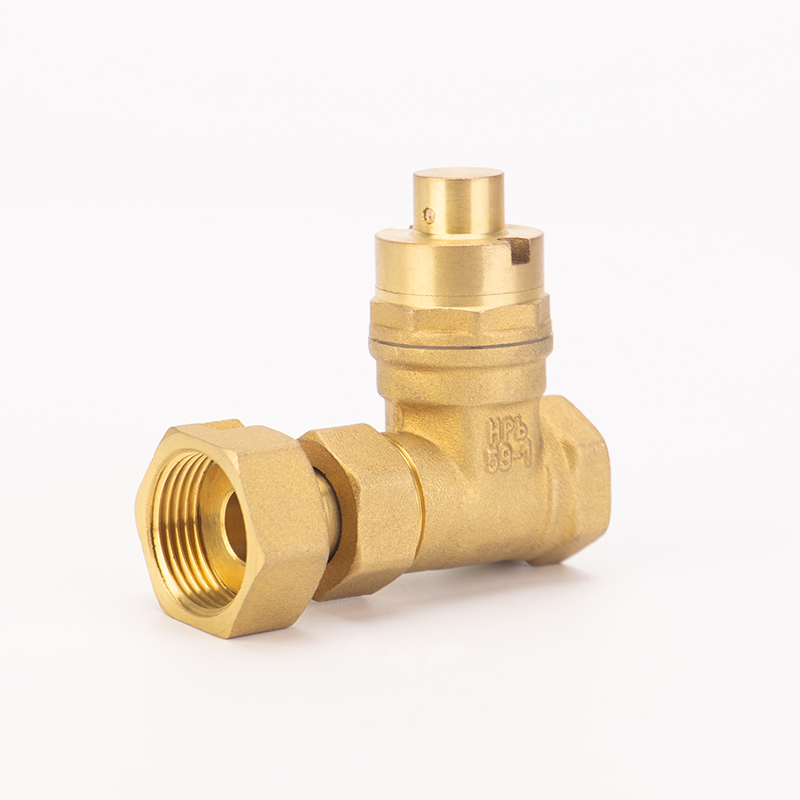
A telescopic gate valve is a specialized fluid control device engineered specifically to resolve dimensional discrepancies in piping systems. Picture a cramped, muddy utility trench. You are trying to align two decades-old, offset pipes. Standard rigid fittings turn this routine task into a logistical nightmare. At its core, this specialized valve functions like a traditional multi-turn mechanism. It utilizes a brass wedge that lowers into the flow path to isolate the water supply. However, its defining feature is the adjustable, sliding union integrated directly into the valve body.
This built-in telescopic mechanism allows the unit to expand or retract along its horizontal axis. By loosening a locking nut, field installers can manipulate the face-to-face (FTF) length to fit a precise gap. Once properly positioned in the line, tightening the assembly compresses the internal O-rings to create a permanent, watertight seal.
When evaluating material longevity, the telescopic brass valve remains the predominant choice across the plumbing and municipal engineering sectors. Heavy-duty brass delivers exceptional corrosion resistance. This is absolutely critical for components exposed to constant moisture, aggressive soil chemistry in buried applications, and fluctuating water temperatures. High-quality models frequently utilize dezincification-resistant (DZR) or CW617N brass to guarantee long-term structural integrity under pressure.
By merging reliable flow isolation with dimensional flexibility, this hybrid design serves as a vital component for engineers. It effectively eliminates the strict dimensional constraints that typically complicate system upgrades.
Recent industry analyses highlight a compelling trend in municipal water management: the aggressive global rollout of Advanced Metering Infrastructure (AMI). As utilities transition to ultrasonic and electromagnetic smart meters to combat non-revenue water (NRW) loss, they face a massive physical bottleneck. These modern digital meters frequently feature significantly different lay lengths than the decades-old mechanical units they replace. Coupled with the urgent rehabilitation of aging underground infrastructure, utility managers constantly encounter severe dimensional discrepancies. Rigid components simply cannot accommodate the unpredictable realities of legacy pipelines. Consequently, this bottleneck is driving a massive industry shift toward adaptable fittings.
Water distribution systems installed forty years ago rarely align with modern manufacturing standards. Over the decades, ISO, DIN, and ANSI specifications have evolved significantly. For instance, when an engineer attempts to replace a legacy valve with a modern equivalent, the new unit is often shorter or longer by several fractions of an inch. A standard valve cannot adapt to this discrepancy. It leaves a physical void that must be bridged manually with extra nipples or unions.
When faced with a minor gap, a common yet highly dangerous field practice is "stretching." Installers sometimes force the existing pipes together to meet the threads of a shorter standard valve. This introduces severe tensile stress into the pipeline infrastructure. Over time, this mechanical strain compromises threaded joints and damages pipe hangers. Inevitably, it leads to stress fractures or catastrophic subterranean leaks. Rigid valves offer zero tolerance for ground settling or thermal expansion that may have shifted the pipes over the years.
If standard valves do not fit and forcing the pipe is too risky, the only alternative is extensive manual modification. Plumbers are forced to shut down the system, cut the existing pipe, and thread new ends in confined spaces. Specifically, this tedious process transforms a simple thirty-minute valve replacement into a multi-hour labor expense. For municipal systems, this drastically increases the downtime of the public water supply.
Understanding the precise environments where an adjustable unit outperforms standard fittings is crucial for efficient project management. Here are the primary scenarios where these flexible valves are highly recommended by field engineers.
The push for municipal modernization often involves swapping a bulky 190mm mechanical meter for a compact 165mm ultrasonic meter. In these frustrating situations, an adaptable fitting acts as the perfect water meter isolation valve. Because it can retract to allow the old meter to slide out, and then expand to precisely meet the flanges of the new meter, it bridges the dimensional gap instantly. This eliminates the need for extensive pipeline reconstruction.
In any water service connection, establishing a reliable shut-off point before the meter is essential for safe maintenance. Utilizing a telescopic design as an upstream gate valve—located on the pressurized city side of the meter—provides significant operational advantages. If the meter or downstream plumbing requires future servicing, this valve safely isolates the municipal supply. Furthermore, its adjustable nature ensures that subsequent meter swaps can be executed rapidly. The upstream connection can simply be loosened and retracted to free the equipment.
Residential plumbing upgrades frequently involve transitioning from old galvanized steel to modern PEX or copper systems. In cramped basements or deep within wall cavities, there is rarely enough physical clearance to operate pipe threaders or soldering torches. An adjustable unit is invaluable here. It empowers plumbers to replace the main house shut-off by simply sliding the telescopic end to meet the existing pipe. This prevents the costly need to tear out adjacent drywall just to create slack in the line.
On a macro scale, municipal repair crews operate under strict time constraints. Shutting down a main water line affects hundreds of households. Repairs must be executed swiftly. In underground valve boxes where maneuverability is severely restricted, cutting and threading large-diameter pipes is physically unfeasible. A telescopic valve can be dropped directly into the existing void and expanded to fit. This restores municipal water service in a fraction of the time required for traditional pipe fitting.
Selecting the correct valve requires a nuanced understanding of operational differences. While static designs and adjustable models each serve distinct purposes, their performance in retrofit environments varies dramatically.
Feature | Standard Gate Valve | Standard Ball Valve | Telescopic Gate Valve |
|---|---|---|---|
Flow Control | Excellent (Full bore, low pressure drop) | Excellent (Full bore, low pressure drop) | Excellent (Full bore, low pressure drop) |
Shut-off Speed | Slow (Multi-turn, prevents water hammer) | Fast (Quarter-turn) | Slow (Multi-turn, prevents water hammer) |
FTF Adaptability | None (Rigid body) | None (Rigid body) | High (Adjustable sliding union) |
Installation Space | Requires exact gap dimensions | Requires exact gap dimensions | Highly forgiving; adapts to variable gaps |
Best Use Case | New construction, stable pipelines | Emergency shut-offs, new builds | Retrofits, meter swaps, confined spaces |
Standard Gate Valves provide reliable, unobstructed flow control. They cause minimal pressure drop. However, their rigid cast bodies cannot adapt to shifting gap dimensions. In contrast, Standard Ball Valves offer the distinct advantage of quick, quarter-turn shut-offs, yet they are equally static. Installing either of these in a mismatched gap usually necessitates purchasing separate, bulky union fittings.
The true advantage of the telescopic design lies in its hybrid functionality. It seamlessly combines the unobstructed flow path of a traditional gate valve—which naturally prevents destructive water hammer—with the unparalleled flexibility of a built-in adjustable union. This dual-purpose engineering consolidates two separate components into one streamlined device.
Investing in specialized adjustable valves yields measurable returns. This applies to both on-site contractors and long-term facility managers looking to optimize maintenance budgets.
The most immediate and tangible benefit is the drastic reduction in installation time. By completely eliminating the need to measure, cut, thread, and clean existing pipes, contractors can complete valve replacements up to 50% faster. In commercial settings, slashing labor hours directly translates to significantly lower overall project costs.
An expanding brass gate valve absorbs dimensional discrepancies gracefully. Because the valve expands outward to meet the pipe—rather than forcing the rigid pipe to bend toward the valve—mechanical stress on the pipeline is entirely mitigated. This stress-free connection preserves the fragile integrity of older cast iron or galvanized pipes. It dramatically lowers the risk of future joint leaks.
Heavy-duty brass construction is engineered for decades of longevity. In addition, the internal O-rings utilized in the sliding mechanism are typically manufactured from industrial-grade EPDM or NBR rubber. This ensures a resilient, watertight seal that easily withstands fluctuating municipal water pressures (often rated for PN16 or PN20), even in deeply buried underground applications.
While the installation process is inherently straightforward, following a systematic approach ensures a secure, leak-free connection. Field engineers recommend the following steps.
Before touching any wrenches, locate the primary municipal shut-off to completely isolate the water supply. Open a downstream faucet or bleed valve to drain the residual water. This safely relieves atmospheric pressure from the line. Ensure the immediate work area in the trench is as dry and accessible as possible.
Carefully unthread or cut out the existing, faulty valve. Thoroughly scrub the remaining pipe threads with a stiff wire brush. Removing stubborn pipe dope, calcified scale, or rust is critical for ensuring a pristine mating surface. Apply fresh, high-density PTFE tape and an approved liquid thread sealant to the male threads of the existing pipe.
Measure the exact distance between the two exposed pipe ends using a reliable tape measure. Take your new telescopic unit and loosen the locking nut on the adjustable union. Retract the sliding section inward so that the total length of the valve is slightly shorter than your measured gap. This crucial step allows for easy, frictionless insertion into the pipeline without scraping off the newly applied thread sealant.
Place the valve inline. Thread the fixed, non-adjustable end of the valve onto the corresponding pipe first. Once that side is secure, expand the telescopic end outward until it sits perfectly flush against the opposing pipe fitting. Thread the connection carefully by hand at first to ensure it is seated correctly. Avoid cross-threading at all costs.
Utilize a pair of pipe wrenches to fully tighten the pipe connections. Finally, securely tighten the locking nut on the telescopic union to compress the internal O-ring. Slowly restore the municipal water pressure. Open the main line gradually to avoid pressure spikes, while keeping a close eye on the newly formed joints to verify there is zero seepage.
Selecting the correct components for a pipeline retrofit requires precise measurements. Unlike standard rigid fittings, an adaptable unit offers flexibility, but it must still be specified correctly to prevent catastrophic leaks.
The primary mechanical advantage of a telescopic design is its variable length. However, accurate field measurement remains non-negotiable. Every adjustable valve features a specific minimum (fully retracted) and maximum (fully extended) face-to-face dimension.
Compare your field measurement against the valve's operational travel range. The existing pipe gap must fall comfortably within the middle of this spectrum. Relying on the absolute maximum extension is a common installation pitfall. It reduces the internal thread engagement of the sliding union, potentially compromising structural stability under high flow rates. Leaving a small margin of travel ensures the internal O-rings maintain maximum surface contact.
Mismatched threads are a leading cause of joint failure in municipal upgrades. Before installation, rigorously verify that the valve threads perfectly match both the existing legacy infrastructure and the new meter connections.
Common industry standards include NPT (National Pipe Tapered) for North America, and BSP/BSPT (British Standard Pipe) utilized heavily across Europe and Asia. Attempting to force an NPT valve onto a BSP fitting will inevitably result in stripped threads and immediate leakage.
Municipal water distribution systems operate under highly specific pressure conditions. The selected component must meet or exceed the maximum allowable working pressure (MAWP) of the specific pipeline sector. Look for standardized ratings such as PN16 or 200 WOG (Water, Oil, Gas) to ensure the component can handle potential pressure surges.
Material selection plays an equally critical role. For complex municipal retrofits or large-scale commercial upgrades, consulting directly with professionals regarding your adjustable gate valve specifications can prevent costly procurement errors. Ensure your selection aligns seamlessly with local regulatory standards.
While standard rigid valves perform admirably in the predictable environment of new construction, telescopic alternatives truly excel in the unpredictable realm of retrofit projects. By absorbing dimensional discrepancies naturally, an expanding brass fitting saves contractors significant labor costs. Simultaneously, it prevents unnecessary mechanical damage to fragile, aging pipes.
If you are struggling with mismatched pipe gaps or planning a large-scale smart meter rollout, investing in the right adaptable valve upfront simplifies complex upgrades. To ensure your next installation is completely stress-free, explore high-performance fluid control solutions at Shuanglin Valves to find the exact specifications required for your project.
Yes, they are highly effective and frequently utilized in residential environments. Plumbers often install them in cramped basements or tight utility closets. They serve as a reliable isolation point during home plumbing upgrades, preventing the messy need to cut into drywall or alter existing rigid copper pipes just to make a new fitting align properly.
No, assuming proper installation procedures are followed. A high-quality adjustable valve utilizes heavy-duty internal O-rings (usually EPDM or NBR) and secure locking nuts. Once the unit is expanded and tightened to the manufacturer's torque specifications, this mechanism creates a permanent, watertight seal that is just as reliable and durable as a standard fixed-length valve.
An upstream valve is located before the water meter, safely controlling the highly pressurized municipal water entering the property. Conversely, a downstream valve is located after the meter, controlling the water flowing into the building's internal plumbing network. Telescopic models are highly recommended for the upstream position to allow for safe, dry meter replacements in the future without relying on the city to shut off the street main.
Expansion capacities vary significantly based on the specific model, manufacturer, and overall pipe diameter. Most standard commercial and residential units offer between 1/2 inch to 2 inches (15mm to 50mm) of telescopic travel. This specific adjustment range is engineered to be more than sufficient to compensate for the standard dimensional discrepancies typically encountered during pipeline retrofits.
Yes. Telescopic gate valves can be installed in both horizontal and vertical orientations. However, when installing vertically, it is crucial to ensure that the pipeline is properly supported with pipe hangers. The valve itself should not bear the entire weight of the vertical pipe drop, as excessive downward force could strain the adjustable union over time.
When manufactured with industrial-grade EPDM or NBR, the internal O-rings are designed to last for decades. They are highly resistant to water degradation, chloramine breakdown, and temperature fluctuations. In standard municipal water applications, a high-quality O-ring seal will typically match the lifespan of the brass valve body itself.


