

close
Choose Your Site
Global
Social Media
Views: 0 Author: Site Editor Publish Time: 2026-10-31 Origin: Site


Did your building's water bill spike unexpectedly this quarter? You might have experienced a sudden drop in water pressure. Worse yet, you may have dealt with a flooded hallway caused by an unauthorized individual tampering with the utility room. For property managers and Homeowner Associations, these scenarios happen far too often. Unsecured meter rooms act as an open invitation for water theft, vandalism, and costly human error.
Standard plumbing fixtures simply fail to protect your vital infrastructure. They are built for ease of use, not security. As a fluid control engineer, I have seen the devastating aftermath of exposed valves time and time again. In this comprehensive guide, we will explore how specialized anti-tamper technology stops unauthorized access dead in its tracks. We will break down exactly who genuinely needs access to your utility rooms, why restricting residents is critical, and how upgrading your systems actively protects your bottom line.
Before diving into specific risks, we must acknowledge a massive shift in building management trends. Urban housing density is increasing at an unprecedented rate. Alongside this growth, municipal water rates are climbing steadily. Consequently, property developers and utility boards are rapidly abandoning reactive maintenance habits. The current industry standard heavily favors proactive, built-in physical security directly at the utility level. Global water conservation mandates are becoming stricter. Leaving main isolation points secured only by flimsy brass padlocks is no longer acceptable for modern multi-family developments.
Strict Access Control: Only authorized personnel like property managers, municipal utility workers, and licensed plumbers should have unrestricted access to central utility systems.
Enhanced Security: Advanced magnetic locking technology provides superior anti-tamper protection compared to easily bypassed traditional padlocks or lockout tags.
Material Matters: Investing in high-grade stainless steel fixtures ensures long-term durability and strict compliance with modern commercial plumbing standards.
Cost Savings: Securing utility rooms prevents unauthorized consumption and drastically reduces the frequency of expensive emergency maintenance calls.
For facility operators, the utility room is the beating heart of building infrastructure. Strangely, it is frequently overlooked during physical security audits. When meters and their accompanying shut-off mechanisms are left exposed, the property faces a cascade of financial vulnerabilities. Anyone with basic physical strength and a simple pipe wrench can manipulate the building's supply. Acknowledging these hidden dangers is the vital first step toward implementing a robust defense strategy.
Utility theft in multi-family residential buildings is a documented, pervasive issue. It directly erodes a property's net operating income. In complexes where individual units are sub-metered, some residents or unauthorized contractors attempt to manipulate unsecured fixtures. They bypass the measuring devices entirely. By altering the flow before it reaches the meter, these individuals consume utilities entirely off the books.
The municipal provider subsequently bills the master account for the glaring discrepancy. This leaves the property owner or the compliant residents footing the bill. A standard brass fixture offers zero resistance to this type of manipulation. Bypassing takes mere minutes. Yet, the financial leakage can persist silently for months before a rigorous audit uncovers it.
Beyond intentional theft, exposed infrastructure invites human error and malicious vandalism. Picture a massive apartment complex on a Sunday evening. A tenant experiencing a minor plumbing issue attempts a DIY fix by venturing into the central utility room. Lacking technical expertise, they accidentally turn off the wrong unit's supply. Sometimes, they shut down a primary riser that feeds an entire floor.
This creates immediate chaos. The management office is suddenly flooded with angry complaints. In cases of intentional vandalism, unsecured components are deliberately damaged or left partially open. This leads to severe pressure imbalances, violent pipe hammering, or catastrophic flooding in subterranean basements.
The legal and financial liabilities tied to unsecured utility rooms are staggering. If an untrained individual tampers with a pressurized pipe and causes a rupture, the resulting flood decimates adjacent units and essential electrical panels. Property managers are hit with immediate water extraction costs, drywall replacement, and potential lawsuits from displaced residents.
Furthermore, frequent unauthorized tampering accelerates wear and tear. Standard fixtures are simply not engineered to be forcefully cranked by untrained hands using improper tools. This misuse strips valve stems and destroys internal seals. Inevitably, it triggers expensive emergency plumbing interventions at double-time hourly rates.
To neutralize the risks associated with exposed plumbing, management must establish rigid access control protocols. The core question is simple yet critical. Who genuinely requires access to the central hub, and who must be kept out? Defining these operational boundaries maintains both system integrity and everyday efficiency.
Access to central infrastructure should be strictly siloed to individuals with a documented operational need. This authorized group typically includes property managers and in-house maintenance staff. They act as the primary custodians. They require access to conduct routine visual inspections, monitor system pressure, and execute building-wide maintenance tasks.
Municipal utility workers also require unimpeded entry. City personnel must perform official readings, conduct periodic recalibrations, and execute official shut-offs for non-payment. Finally, in the event of a structural fire or pipe failure, emergency responders and licensed plumbers need immediate access to the main water meter isolation valve to secure the building and mitigate damage.
Individual residents should never have physical access to the master utility room. From a purely practical standpoint, untrained occupants lack the necessary expertise to safely navigate commercial-grade infrastructure. Allowing tenant access drastically multiplies the probability of accidental shut-offs and cross-unit interference.
Legally speaking, the demarcation point of responsibility dictates that tenants are only responsible for the fixtures within their specific leased footprint. Residents should exclusively operate the localized shut-offs located directly beneath their sinks or behind their toilets. Locking down the central room protects the tenants from potential liability and ensures management retains absolute control over life-safety systems.
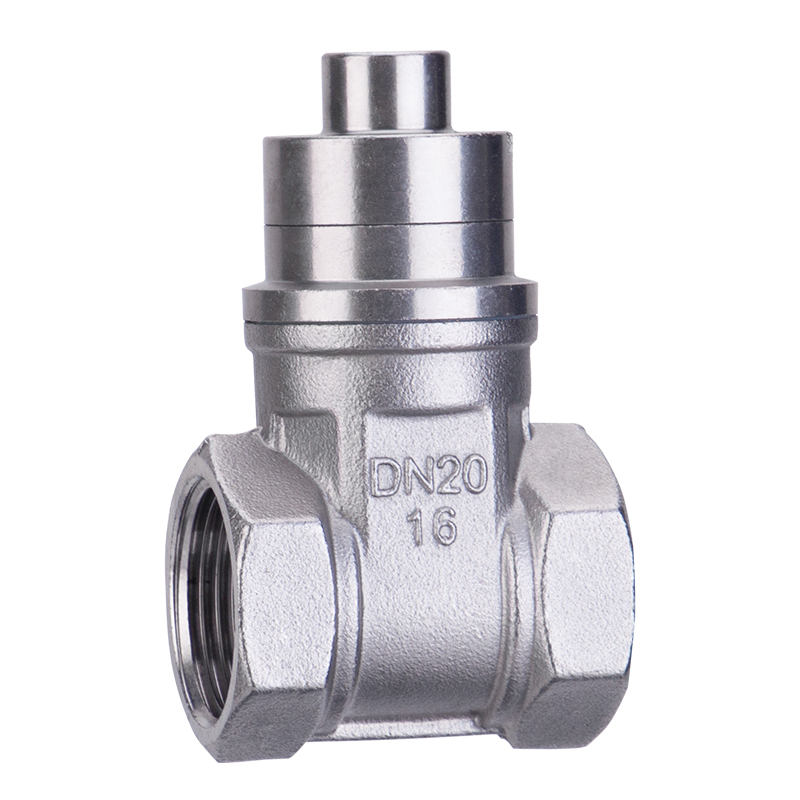
Recognizing the glaring vulnerabilities of standard hardware, the commercial plumbing industry engineered specialized solutions to harden utility access points. Designed specifically for high-risk, multi-family environments, this technology integrates access control directly into the mechanical operation of the fixture itself.
The core innovation lies in its internal engagement mechanics. Traditional designs rely on a solid, continuous connection between the external handwheel and the internal stem. If you turn the wheel, the gate opens or closes. A magnetic lockable gate valve completely disrupts this continuous connection.
It utilizes a highly calibrated, specialized magnetic key. When the correct key is placed into the designated receptacle on the handle, internal magnetic pins align. This engages the turning mechanism with the internal stem, allowing normal operation. Once the key is removed, the internal mechanism disengages entirely. The handwheel enters a freewheeling state. If a vandal attempts to force the handle using heavy-duty pipe wrenches, the wheel simply spins freely in a 360-degree circle without moving the internal gate. Because there is no traditional keyhole, the lock cannot be picked. It cannot be sabotaged by injecting superglue.
To truly understand the value of this upgrade, let us look at the technical differences side-by-side.
Feature | Standard Brass Valve + Padlock | Magnetic Lockable SS Valve |
|---|---|---|
Security Mechanism | External padlock and chain | Built-in magnetic freewheeling handle |
Vandalism Resistance | Low (easily cut with bolt cutters) | Extremely High (spins freely under force) |
Corrosion Resistance | Moderate (prone to dezincification) | Excellent (304/316 Stainless Steel) |
Keyhole Sabotage | Vulnerable to glue and picking | Immune (no physical keyhole exists) |
Long-term Maintenance Cost | High (frequent replacements) | Very Low (durable, enclosed design) |
When upgrading a building's infrastructure, selecting the correct hardware requires a careful review of mechanical specifications. Not all security fixtures are engineered to the same rigorous standards. Decision-makers must evaluate several key features to guarantee long-term reliability.
The material composition is arguably the most critical factor in longevity. This is particularly true in subterranean, damp utility environments. While brass serves as a traditional baseline in residential plumbing, commercial applications increasingly demand superior metallurgy. Investing in a stainless steel locking gate valve offers distinct, empirical advantages.
Authentic 304 or 316 grade stainless steel is virtually impervious to the dezincification process that plagues brass fittings in specific water chemistries. It forms a passive oxide layer that prevents rust. In a poorly ventilated basement room, a stainless steel unit will not corrode. This ensures that the internal magnetic locking mechanism remains functional and the gate operates smoothly for decades.
A high-quality commercial valve must handle fluctuating municipal water pressures without failing. When selecting a unit, verify that it is rated for PN16 or PN25 nominal pressure, depending on your building's height and booster pump system. Furthermore, ensure the internal sealing utilizes hard-wearing materials like PTFE or metal-to-metal hard sealing to prevent micro-leaks over time.
Multi-family utility rooms feature complex piping configurations with wildly varying diameters. You must source from a manufacturer that provides a comprehensive sizing matrix. Typically, isolation hardware ranges from smaller DN15 pipes for individual apartment sub-meters up to DN50 or larger for main building risers. Verifying precise compatibility with the building's existing threading standards like NPT or BSP is vital for a secure, leak-free integration.
For condo boards, HOAs, and property investors, upgrading infrastructure is a capital expenditure. It must be justified through a clear Return on Investment. Transitioning to advanced locking technology is not merely a security enhancement. It is a calculated financial strategy designed to protect revenue streams and slash operational overhead.
The most immediate financial triumph is the total elimination of unmetered consumption. In a sprawling complex, even a minor 2% to 3% rate of meter bypassing bleeds thousands of dollars in utility losses annually. By installing a tamper-proof fixture before the meter, management guarantees that every drop flowing into a tenant's unit is accurately measured. Often, the initial procurement and installation costs are recouped within the first 12 to 18 months solely through recovered revenue.
Emergency plumbing contractors operate at a steep premium during weekends or midnight hours. When an unauthorized person tampers with a standard fixture and triggers a localized leak, management has no choice but to dispatch a crew. These callouts frequently cost hundreds of dollars per incident. By physically locking down access, the frequency of these human-induced emergencies plummets to near zero.
Water damage consistently ranks as one of the leading causes of massive insurance claims in multi-family properties. Underwriters assess risk based on the proactive preventative measures a building deploys. Demonstrating to an insurance provider that the property has fortified its critical infrastructure with anti-tamper magnetic technology serves as a powerful negotiating lever. Implementing these strict controls frequently leads to favorable adjustments in property insurance premiums.
Procuring top-tier hardware is only half the battle. Proper installation and rigorous ongoing access management are required to maintain the integrity of the security perimeter. Facility managers must establish strict protocols for both the physical retrofit and the handling of the magnetic keys.
A primary concern for facility operators is the perceived complexity of integrating new security hardware into aging buildings. Fortunately, retrofitting an existing system is a highly standardized procedure for licensed professionals. Older brass units often share the exact face-to-face dimensions and threading standards as modern locking equivalents.
During a typical retrofit, a licensed plumber begins by locating the main municipal shut-off to safely isolate the building's supply. Once the localized pipe network is meticulously drained, the vulnerable infrastructure is unbolted. This exposed state provides an excellent opportunity to inspect surrounding pipework for mineral buildup or stress fractures. The new valve is then installed using precise torque and appropriate sealing materials like Teflon tape or specialized flanged gaskets. Finally, the supply is gradually restored, the system is pressure-tested for leaks, and the freewheeling mechanism is verified.
The absolute security of a magnetic system relies entirely on the strict chain of custody of its corresponding key. If keys are distributed casually among building staff or external contractors, the anti-tamper benefits evaporate instantly. Management companies must enforce a rigid key protocol.
Best practices dictate that the primary magnetic keys reside in a secure, combination-locked safe within the main management office. When a plumbing contractor or city utility worker requires entry, they must sign the key out using a formal logbook. They must record the exact date, time, and operational reason for access. Unauthorized duplication must be explicitly prohibited. By maintaining this tight control, HOAs ensure that only vetted personnel manipulate the building's lifeblood.
Securing your apartment complex's central utility room is not an optional upgrade. It is a fundamental necessity. It actively protects vulnerable building infrastructure, guarantees accurate utility billing, and maintains operational order. Transitioning from easily compromised, outdated fixtures to advanced magnetic locking technology is a highly intelligent, future-proof investment.
This proactive upgrade definitively stops tampering, eradicates utility theft, and slashes emergency repair budgets. Stop relying on flimsy padlocks to protect your most critical assets. Take the time to assess your current meter rooms today. For high-quality, commercial-grade solutions, visit Shuanglin Valves to find the exact tamper-proof isolation technology that fits your project's specifications and protects your property.
Generally, no. Tenants are usually only permitted to access the specific, localized shut-off fixtures located inside their own leased apartments. The main meter room is strictly restricted to facility managers and certified utility workers to prevent accidental shut-offs and intentional tampering.
Standard padlocks are highly vulnerable. They can be quickly severed with bolt cutters or have their keyholes vandalized with superglue. A magnetic locking fixture features a built-in, internal mechanism requiring a specific, coded magnetic key. Without it, the handle simply spins freely in a circle, making it entirely tamper-proof against heavy tools.
Yes, absolutely. Stainless steel offers exceptional, scientifically proven resistance to corrosion, rust, and physical blunt-force damage. This guarantees a significantly longer operational lifespan in damp, poorly ventilated basement environments compared to standard, rust-prone cast iron or brass alternatives.
Property management should always retain a master spare key locked securely in the main office. If all copies are somehow lost, you must contact the original manufacturer. They can securely issue a replacement key based on your original purchase records and the specific magnetic coding assigned to your building's hardware.
While national plumbing codes prioritize general safety and flow requirements, local municipal codes and utility provider regulations increasingly mandate lockable isolation points for multi-family sub-metering. This ensures the utility provider can legally and safely terminate service for non-payment without accessing a tenant's private living space.
A true commercial-grade magnetic lockable valve is designed specifically so it cannot be bypassed externally. In the rare event of a catastrophic internal mechanical failure during an emergency, building maintenance must shut off the primary city inlet valve upstream. From there, the entire faulty valve unit must be unthreaded or unbolted and replaced by a licensed professional.


