

close
Choose Your Site
Global
Social Media
Views: 0 Author: Site Editor Publish Time: 2026-09-17 Origin: Site


Every year, non-revenue water (NRW) and unauthorized tapping hemorrhage billions of dollars from global utility budgets. Picture a street-level irrigation control box or a remote district heating node exposed to heavy foot traffic. Standard isolation points leave these critical lifelines completely vulnerable to tampering, casual vandalism, and accidental operation.
A specialized anti-tamper gate valve solves this exact vulnerability by physically hardening the pipeline infrastructure. However, navigating the procurement of these specialized components requires a sharp, technical eye. This guide breaks down exactly what procurement officers and field engineers must evaluate before signing off on their next bulk infrastructure order.
Security is Paramount: Integrating mechanical anti-tamper mechanisms directly into the valve bonnet prevents unauthorized access and safeguards utility revenue.
Material Quality Dictates Lifespan: Selecting the appropriate brass grade—specifically Dezincification Resistant (DZR) CW602N or Lead-Free alloys—prevents catastrophic structural failure in aggressive soil environments.
Technical Specs Matter: Procurement requires precise matching of pressure ratings (e.g., PN16/PN25), thread standards (NPT/BSP), and sealing materials to the specific demands of the network.
Supplier Vetting is Crucial: Partnering with a certified manufacturer ensures rigorous 100% hydrostatic testing and reliable long-term operational support.
Unlike standard isolation devices—which can be manipulated by anyone carrying a basic crescent wrench—this specialized pipeline component integrates a physical security barrier directly into its actuation mechanism. It functions as a primary drop-tight shut-off point while simultaneously acting as a robust deterrent against unauthorized operation.
The engineering behind these secure components focuses on completely isolating the handwheel or operating nut from the internal threaded stem. Depending on municipal design requirements, the locking mechanism operates through several primary methods. Magnetic key systems, for instance, utilize a uniquely coded magnetic alignment. Without the exact proprietary key, the handwheel simply spins freely on its axis without engaging the valve stem.
Other designs feature integrated padlock flanges that physically block rotational movement, or specialized mechanical keys that engage an internal clutch—similar in design to a high-security commercial door lock. By securing this actuation point, the pipeline remains strictly in its intended state until authorized maintenance crews intervene.
Recent market analysis reveals a massive pivot in how municipalities approach grid security. Over the past five years, immense capital has been poured into digital smart meters and IoT leak detection sensors. However, utility operators are increasingly recognizing a critical vulnerability: digital oversight cannot physically stop a bad actor. Knowing a line has been tapped is helpful data, but preventing the tap entirely is the ultimate operational goal.
Consequently, there is a surging trend toward hybrid infrastructure strategies. Water authorities across Europe and North America are increasingly pairing advanced digital monitoring with physically hardened components at the street level. As global regulations surrounding water conservation tighten and non-revenue water targets become strictly enforced, the demand for robust, tamper-proof mechanical barriers is projected to grow exponentially. Physical security is no longer viewed as an optional upgrade; it is a foundational requirement for modern grid resilience.
Utility operators are actively transitioning away from traditional valves due to measurable improvements in risk mitigation. The decision to upgrade a utility gate valve is largely driven by persistent operational pain points that drain municipal budgets.
Non-revenue water (NRW) and unmetered gas extraction represent massive financial losses. Illegal tapping often occurs at easily accessible, unsecured nodes. Installing hardened valves physically deters bad actors from bypassing meters or opening disconnected supply lines, directly protecting the bottom line.
Furthermore, safety and regulatory compliance play a massive role. In industrial and municipal maintenance, strict adherence to Lockout/Tagout (LOTO) protocols is legally mandated. A secure locking mechanism ensures that a pipeline remains definitively shut off while crews work downstream. This prevents accidental turn-ons that could trigger catastrophic flooding, fatal gas leaks, or severe steam burns.
Feature | Standard Brass Gate Valve | Mechanical Locking Gate Valve |
|---|---|---|
Access Control | None (Operable by basic tools) | Strict (Requires proprietary magnetic/mechanical key) |
NRW Prevention | Low (Highly vulnerable to tapping) | High (Physically blocks unauthorized opening) |
LOTO Compliance | Requires external, easily broken chains | Factory-integrated, tamper-proof housing |
Initial CAPEX | Low | Moderate to High |
Total Cost of Ownership (10 Yrs) | High (Due to theft, vandalism, and emergency repairs) | Low (Drastically reduces maintenance and resource loss) |
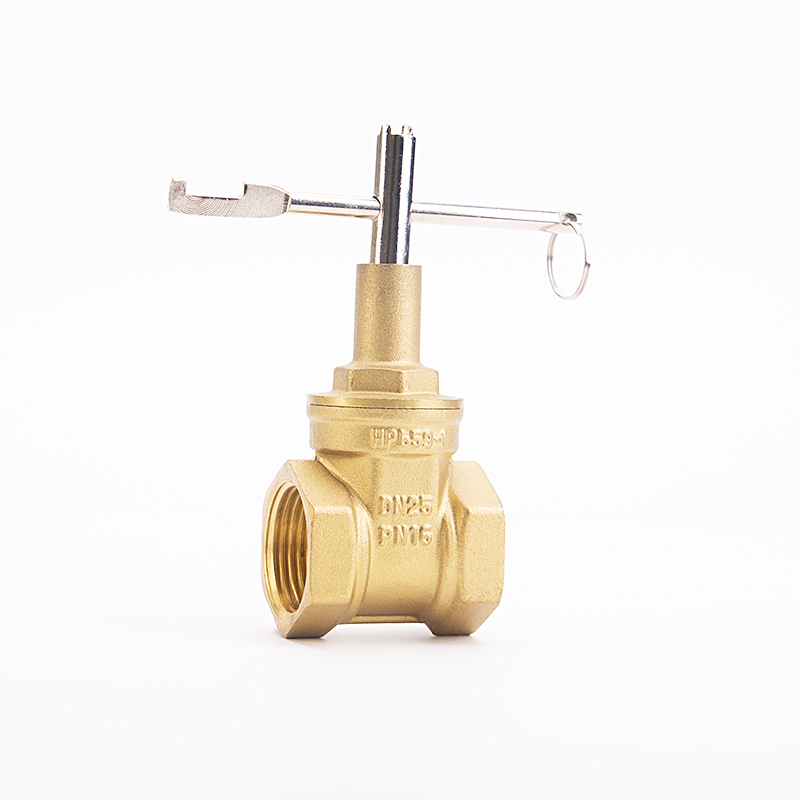
Procuring the correct component requires strict scrutiny of technical data sheets. A minor mismatch in specifications can quickly escalate into catastrophic system failure, underground leaks, or frustrating operational bottlenecks. When evaluating a mechanical lock gate valve, buyers must match the following metrics to their specific field conditions.
The nominal pressure (PN) rating indicates the maximum safe working pressure the unit can withstand at a standard ambient temperature. Selecting inadequate pressure ratings inevitably results in structural rupture or seal blowouts under stress. For low-pressure residential distribution, PN10 (approx. 145 PSI) is usually sufficient. However, standard municipal mains typically require PN16 (232 PSI). High-rise buildings and district heating networks demand robust PN25 (362 PSI) ratings. Always calculate the maximum potential water hammer spikes in your network to ensure a sufficient safety margin.
A secure, drop-tight connection relies on perfectly matching the threading to your existing pipeline infrastructure. BSP (British Standard Pipe) is standard across Europe and Asia, relying either on O-rings for parallel threads or sealants for tapered ones. Conversely, NPT (National Pipe Thread) is the North American standard, forming a seal through thread compression combined with pipe dope. For larger municipal pipes (typically above DN50), evaluate flanged connections to ensure structural stability under massive flow rates.
The internal diameter dictates flow capacity. Full bore (or full port) designs feature an internal diameter equal to the connecting pipe. In utility networks, full bore is highly preferred because it offers zero flow restriction, minimizes costly pressure drops, and allows pipeline cleaning tools (pigs) to pass through unobstructed. Reduced bore models may save upfront costs, but they introduce turbulence that quietly increases pumping energy expenditures over time.
Operational temperature limits are dictated by internal sealing materials, not the brass exterior. Cold water utilities utilizing NBR or EPDM rubber seals are highly effective for temperatures ranging from -10°C to 120°C. If the network handles potable water, ensure the EPDM is WRAS or NSF/ANSI 61 certified. For district heating or industrial steam pipelines exceeding 120°C, buyers must specify PTFE (Teflon) seals or metallic wedge seals. Standard rubber will rapidly degrade, harden, and leak under continuous thermal stress.
The metallurgical composition of the valve body directly determines its lifecycle, especially when buried in damp soil or exposed to aggressive water chemistry. Brass is an alloy of copper and zinc, but the specific grade must be carefully selected based on the installation environment.
Standard CW617N hot-forging brass is incredibly strong and cost-effective, making it ideal for indoor, non-aggressive fluid systems. However, if placed in acidic or mineral-rich soils, it becomes highly vulnerable to chemical degradation.
Dezincification is a destructive form of corrosion where zinc is selectively leached out of the alloy by aggressive water, leaving a porous, fragile copper shell that crumbles under pressure. DZR brass (specifically CW602N) undergoes a specialized thermal treatment to prevent this leaching. For any component buried underground or handling hard water, DZR brass is an absolute mandatory specification to prevent unexpected structural failure.
In addition, with global regulations regarding potable water safety tightening, lead-free brass is rapidly becoming the industry standard. These specific alloys replace trace lead with bismuth or silicon, ensuring zero toxic leaching into public drinking water while maintaining essential machinability for the manufacturer.
The structural integrity of your grid is directly tied to the manufacturing standards of your chosen vendor. Vetting a brass gate valve supplier requires looking past glossy marketing materials and deeply examining their quality control frameworks and engineering capabilities.
A credible manufacturer operates under strict international guidelines, holding at least an ISO 9001 certification. The difference between a failing component and a durable one often comes down to factory testing protocols. Authoritative manufacturers do not rely on random batch testing; they implement 100% hydrostatic shell testing and pneumatic seat leak testing on every single unit before shipment. Furthermore, they should possess in-house spectrometers to verify the exact chemical composition of every raw brass ingot before forging begins.
Because utility networks are rarely one-size-fits-all, look for robust OEM/ODM capabilities. A capable partner can customize thread standards, modify stem lengths for deep underground installations, and provide specialized key coding—such as "keyed alike" systems for district-wide worker convenience or "keyed different" setups for strict, localized access control.
Even the most precisely engineered lockable water valve will fail prematurely if installed incorrectly or neglected over time. Implementing evidence-based engineering practices ensures the locking mechanism functions smoothly and maintains a drop-tight seal.
Before threading the component onto the line, the entire pipeline must be thoroughly flushed. Construction debris, sand, or pipe shavings trapped in the line can score the brass wedge when it closes, resulting in a permanent internal leak. When installing, always ensure perfect pipe alignment to prevent cross-threading. Apply an appropriate thread sealant, such as PTFE tape, wrapping it in the direction of the thread, but avoid over-application which can extrude and jam internal mechanisms.
Never use the locking handwheel or the lock housing as a leverage point for tightening. Always use a properly sized wrench on the hexagonal flats of the brass body. Applying torque to the upper assembly can distort the bonnet and cause the internal clutch or magnetic lock to seize.
While designed for low maintenance, periodic checks are required. Annually lubricate mechanical keyways with a dry graphite or silicone-based spray. Avoid heavy oil-based lubricants, as they attract grit that will eventually jam the lock tumblers. Finally, field crews should exercise the unit annually—unlocking and fully cycling it from open to closed—to prevent mineral calcification on the internal wedge.
Choosing the right pipeline isolation technology requires a careful balance of security features, metallurgical quality, and precise technical specifications. Securing utility networks is a highly strategic investment that pays for itself over time by actively preventing resource loss and extending the lifespan of municipal assets. Consistent service delivery depends heavily on reliable, tamper-proof infrastructure.
By thoroughly evaluating pressure ratings, DZR material grades, and supplier testing protocols, procurement teams can confidently protect their networks. If you are looking to upgrade your municipal or commercial infrastructure with high-quality, fully tested mechanical locking solutions, explore the specialized product ranges at Shuanglin Valves to find the exact specifications your project demands.
While aftermarket lockout/tagout (LOTO) devices and chains certainly exist, they are primarily designed for temporary maintenance safety rather than long-term security. Retrofitting a standard unit often leaves the stem or bonnet exposed to aggressive tampering. A factory-integrated anti-tamper design features a reinforced forged housing that completely encloses the operational components, providing significantly higher durability, weather resistance, and permanent security that aftermarket add-ons simply cannot match.
For underground installations, standard CW617N brass is highly susceptible to corrosion caused by soil acidity and moisture. The optimal choice is DZR (Dezincification Resistant) brass, such as CW602N. This specific alloy undergoes a specialized heat treatment process that prevents zinc from leaching out when exposed to aggressive soil conditions, ensuring structural integrity is maintained over decades of burial.
No, manufacturers offer highly customizable keying systems tailored to your operational protocols. For maximum convenience and rapid response during emergencies, suppliers can provide a "keyed alike" system, where a single master key operates every unit in a specific district. Alternatively, for strict access control in sensitive areas, you can request a "keyed different" system, ensuring only authorized personnel can access individual nodes.
A traditional padlock design relies on an external lock passing through a chain or a drilled handwheel, making it vulnerable to bolt cutters, picking, and environmental seizing from rust or ice. In contrast, a magnetic mechanical lock utilizes a sealed internal mechanism operated by a uniquely coded magnetic key. Because there is no traditional keyhole, it is virtually pick-proof, highly resistant to physical destruction, and completely sealed against dirt, water, and freezing temperatures.
While the external brass body and locking mechanisms may look identical, the internal sealing materials must be strictly matched to the media being transported. Units intended for water utilities typically utilize EPDM O-rings, which handle water and chloramines excellently. Gas utilities, however, require NBR or HNBR seals, as gas will rapidly degrade EPDM rubber. Buyers must explicitly specify the application media to ensure the manufacturer installs the correct, certified sealing materials.
Bypassing a specialized magnetic lock in the field without the proprietary key is intentionally difficult. It requires heavy destructive tooling, typically an angle grinder, to cut through the hardened brass bonnet and manually access the operating stem. This inevitably destroys the upper assembly of the valve. For this reason, utilities are strongly advised to procure backup master keys and implement strict key-management protocols rather than relying on field destruction during an emergency.
Yes. By design, standard solid wedge or flexible wedge gate valves, including those with mechanical locking bonnets, are inherently bidirectional. They provide a drop-tight seal regardless of which direction the fluid is flowing. However, field engineers must ensure the pipeline is cleared of debris before initial operation, as sediment trapped in the bottom seat can compromise the seal in either flow direction.


